Chi for Two®: A Relational, Developmental Approach to Embodiment & Trauma Healing
A somatic, relational method that supports nervous system repatterning, generational healing, and a more connected, embodied way of living
In-person in Atlanta, GA, and online across Georgia
Embodied change in how you relate—to yourself, others, and life—happens through relational experiences that support connection, expression, and individuation.
You are someone who feels deeply, senses the nuances of others, and wants to stay true to yourself while still being in connection.
At times, you may find yourself overwhelmed, anxious, shut down, or pulled off center—especially in certain relationships or environments. You might notice a pattern of either over-functioning or pulling away, unsure how to stay connected without losing yourself.
You may sense your capacity—your aliveness, your voice, your clarity—but something makes it hard to fully step into it, especially in the presence of others.
Nothing is wrong with you. This reflects how your nervous system learned through relationship—and through patterns carried across generations.
Early experiences and our lineage shape not only how we connect, but how we express, assert, and individuate. When these developmental rhythms of connection and separation aren’t fully supported, the body adapts—often limiting expression, softening impulses, or holding back the natural movements that help us become more fully ourselves.
Over time, these patterns can become automatic, showing up as a kind of internal blockage—where energy, connection, expression, and individuality feel harder to access or sustain.
To shift these patterns, insight alone isn’t enough.
Your body needs new relational experiences—ones that support not just connection, but also expression, differentiation, and the capacity to be fully yourself in the presence of another.
Chi for Two®: A Relational, Developmental Approach to Embodied Change
Chi for Two is a relational, developmental somatic method designed to support deep and lasting change in how you relate—to yourself, to others, and to life.
Rather than focusing only on individual coping or regulation, this work centers on the interaction between nervous systems—how ways of responding to stress, connection, and closeness are shaped, reinforced, and ultimately transformed through relationship.
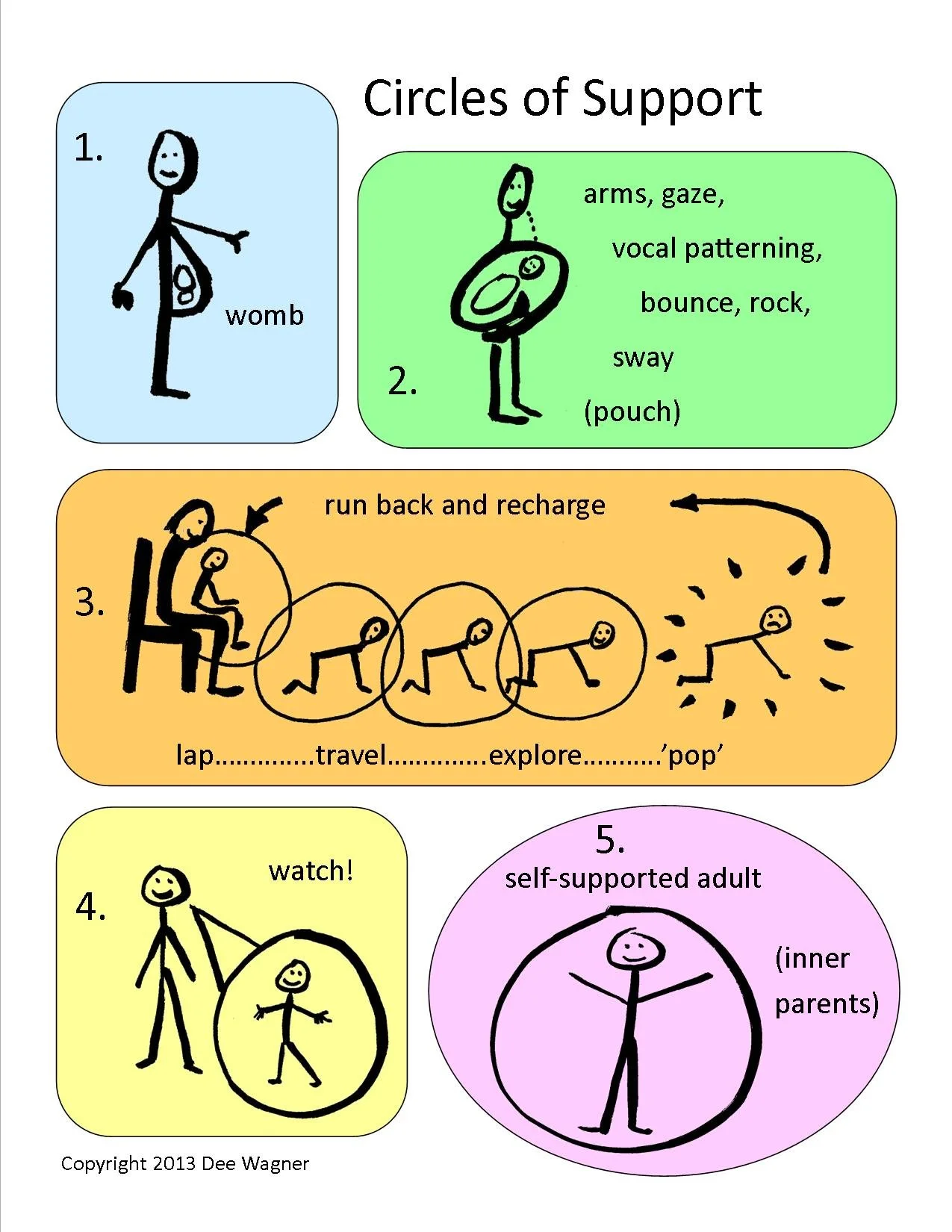
Many of these responses are learned early in life, before we have words. When experiences are overwhelming, inconsistent, or incomplete, the body adapts—holding protective strategies that continue to shape how you feel, move, and relate over time.
Through invitational, relational practices, Chi for Two offers the body new experiences—often described as symbolic redos—that support nervous system repatterning.
These practices draw from early developmental movement patterns, allowing the body to revisit and reorganize foundational experiences of safety, connection, exploration and individuation. As these shifts occur, many people begin to experience greater flexibility, responsiveness, and a more grounded sense of ease in themselves and in relationship.
Rather than working only with thoughts or behaviors, this approach supports change at the level of physiology—where these patterns live and take shape.
This work is grounded in an integration of attachment theory, trauma research, dance/movement therapy, and nervous system science, to name a few. While informed by polyvagal theory, Chi for Two expands beyond it—focusing specifically on how two-person interactions influence biological states and relational capacity.
It is a comprehensive, multi-year training and an ISMETA-Approved Training Method, reflecting their worldwide standards and requirements for depth, scope, competencies and ethics.
In my practice, this work is expressed through M-Bodied®, where these relational and developmental principles are woven into therapy for individuals and families—supporting deeper nourishment, connection, and change that extends beyond the therapy room.
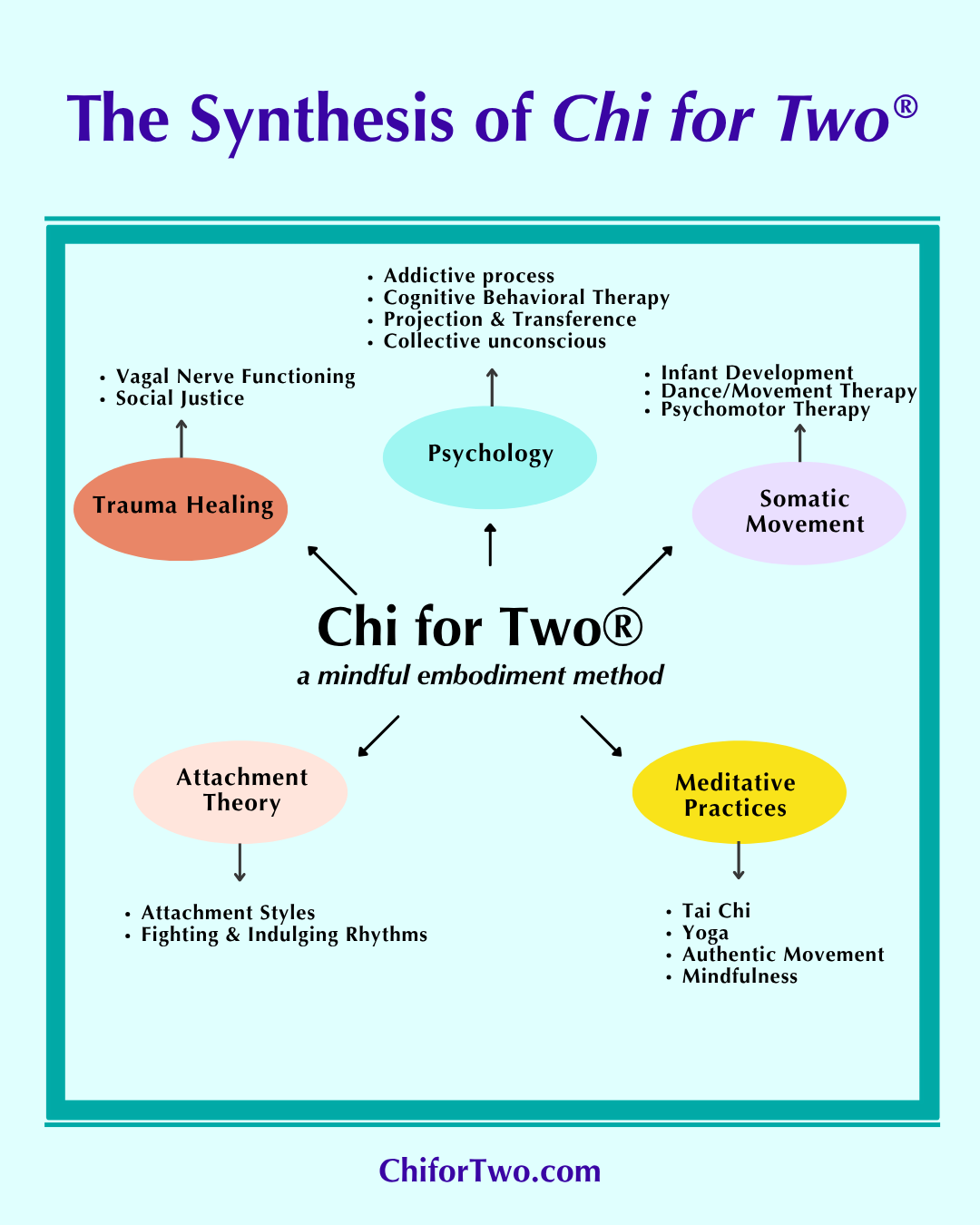
Chi for Two weaves together important elements from the following healing modalities:
-
Chi for Two synthesizes influences from the following leaders in Psychology:
Freud the creator of psychoanalysis; Jung originator of the concepts of individuation and Collective Unconscious, Winnicott influential in Object Relations, Berne creator of Transactional Analysis, Ellis creator of Rational Emotive Therapy, Marion Woodman Jungian analyst that focused on the addictive process, Gabor Maté author of In the Realm of Hungry Ghosts: Close Encounters with Addiction
-
Chi for Two synthesizes influences from the following leaders in Somatic Movement:
Andrea Olsen leader in Experiential Anatomy, Bonnie Bainbridge Cohen developer of Body-Mind Centering, Peter Levine originator of Somatic Experiencing, Al Pesso and Diane Boyden creators of Pesso Boyden System Psychomotor Therapy, Marian Chace leader in Dance/Movement Therapy, Janet Adler developer of Authentic Movement, Feldenkrais author of Awareness Through Movement, Alexander developer of the Alexander Technique
-
Chi for Two synthesizes influences from the following leaders in Meditative Practices:
Jalaja Bonheim author of The Serpent and the Wave, David Emerson author of Overcoming Trauma through Yoga, Ram Dass author of Be Here Now, Various writers on Tai Chi, Yoga, Zen Meditation, and the Tao Te Ching
-
Chi for Two synthesizes influences from the following leaders in Attachment Theory:
Mary Ainsworth the developer of the idea of attachment styles, Louise Kaplan who wrote Oneness and Separateness, Edward Tronick creator of Still Face Experiments, author (with Claudia Gold) The Power of Discord, Kestenberg and colleagues developers of Kestenberg Movement Profile, Harville Hendrix who wrote Getting the Love You Want, Sue Johnson who wrote Hold Me Tight, Esther Perel who wrote Mating in Captivity, Hazan & Shaver first to associate attachment styles with romantic interactions, Sue Carter who studies the neuropeptide oxytocin, Lisa Diamond author Chapter 5 Bases of Adult Attachment
-
Chi for Two synthesizes influences from the following leaders in Trauma Healing:
Peter Levine author of Waking the Tiger and Trauma and Memory, Understanding of vagal nerve functioning inspired by Stephen Porges expanded upon by Chi for Two, Clarissa Pinkola Estés the Mestiza Latina post-trauma specialist who wrote Women Who Run With the Wolves, Resmaa Menakem author of My Grandmother's Hands: Racialized Trauma and the Pathway to Healing Our Minds and Bodies and Monsters in Love: Why Your Partner Sometimes Drives You Crazy―and What You Can Do About It, Isabel Wilkerson, author of Caste: The Origins of Our Discontents, Kimberlé Williams Crenshaw creator of concept intersectionality, Robert Bly author of Iron John: A Book about Men, Michael Meade who speaks of the Genius within each person, Kathy Steele co-author of The Haunted Self
What Sessions May Feel Like
-
Chi for Two is an experiential and relational somatic approach—so sessions often feel different from traditional talk therapy.
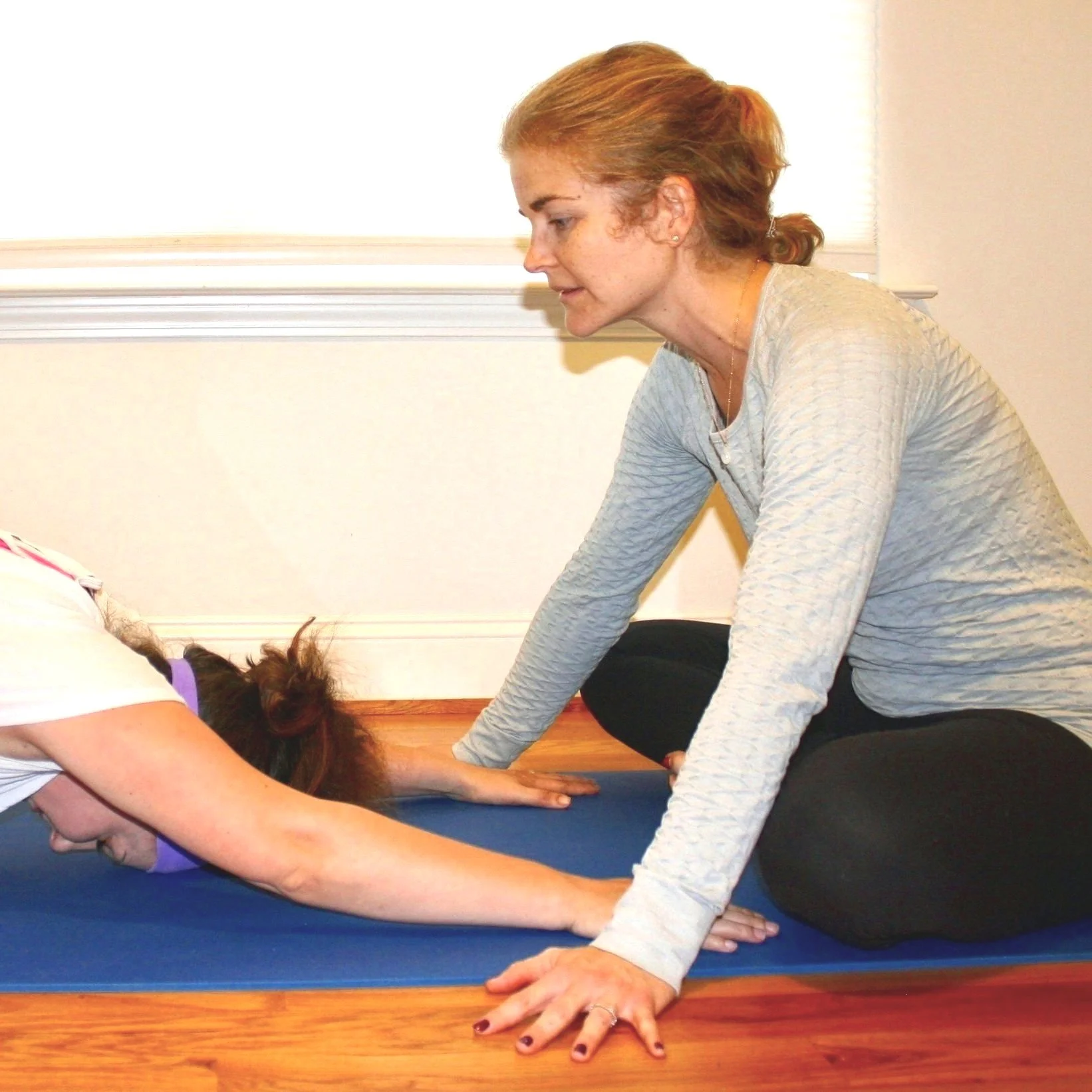
Sometimes we talk. Sometimes we slow things down and notice what’s happening in your body. At times, we may explore developmentally-informed movement and relational practices that support new experiences of connection, expression, and individuation.
You are always invited into anything we explore.
-
This work is not about forcing change or “getting it right.” It values depth over speed, and invitation over prescription.
Rather than “doing” something to you, we work in a relational, responsive way—attuning to what is emerging moment by moment. Your system sets the pace, with space for curiosity, choice, and integration.
You don’t have to perform, explain everything clearly, or arrive with the “right” words—your experience is enough.
-
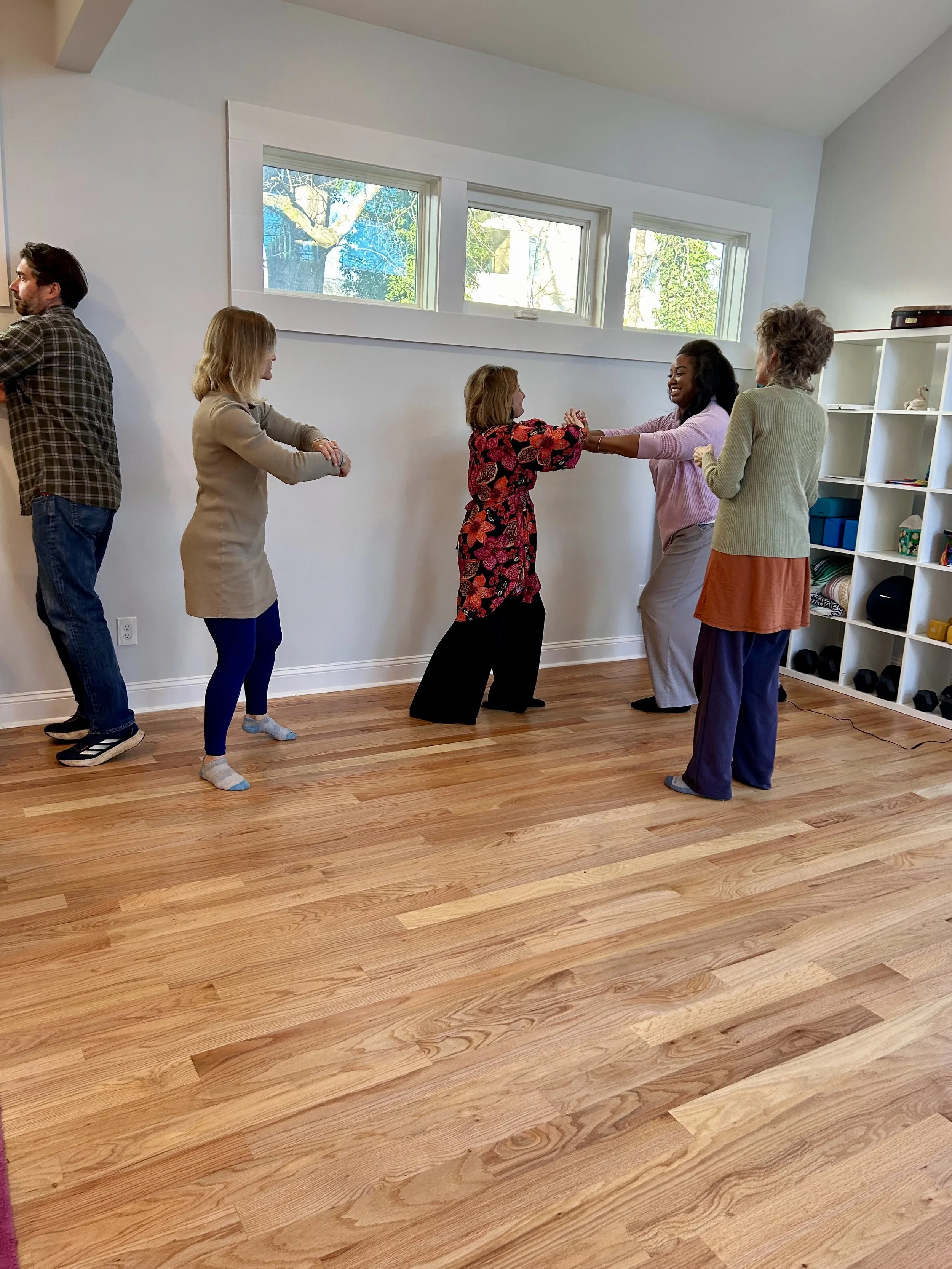
Because this method is relational, part of the work happens in real time—through the interaction between us.
You may begin to notice familiar patterns as they arise: reaching, holding back, bracing, softening, or pushing away. These are not problems to fix, but expressions to be understood and supported.
Together, we explore developmentally-informed ways of moving through these moments—supporting new internal experiences that allow for both connection and individuation. This kind of relational experience—being met, supported, and responded to in real time with another human being—is an essential part of how change becomes possible.
-
Since movement is part of our work, it is simple, supported, and purposeful—not performative.
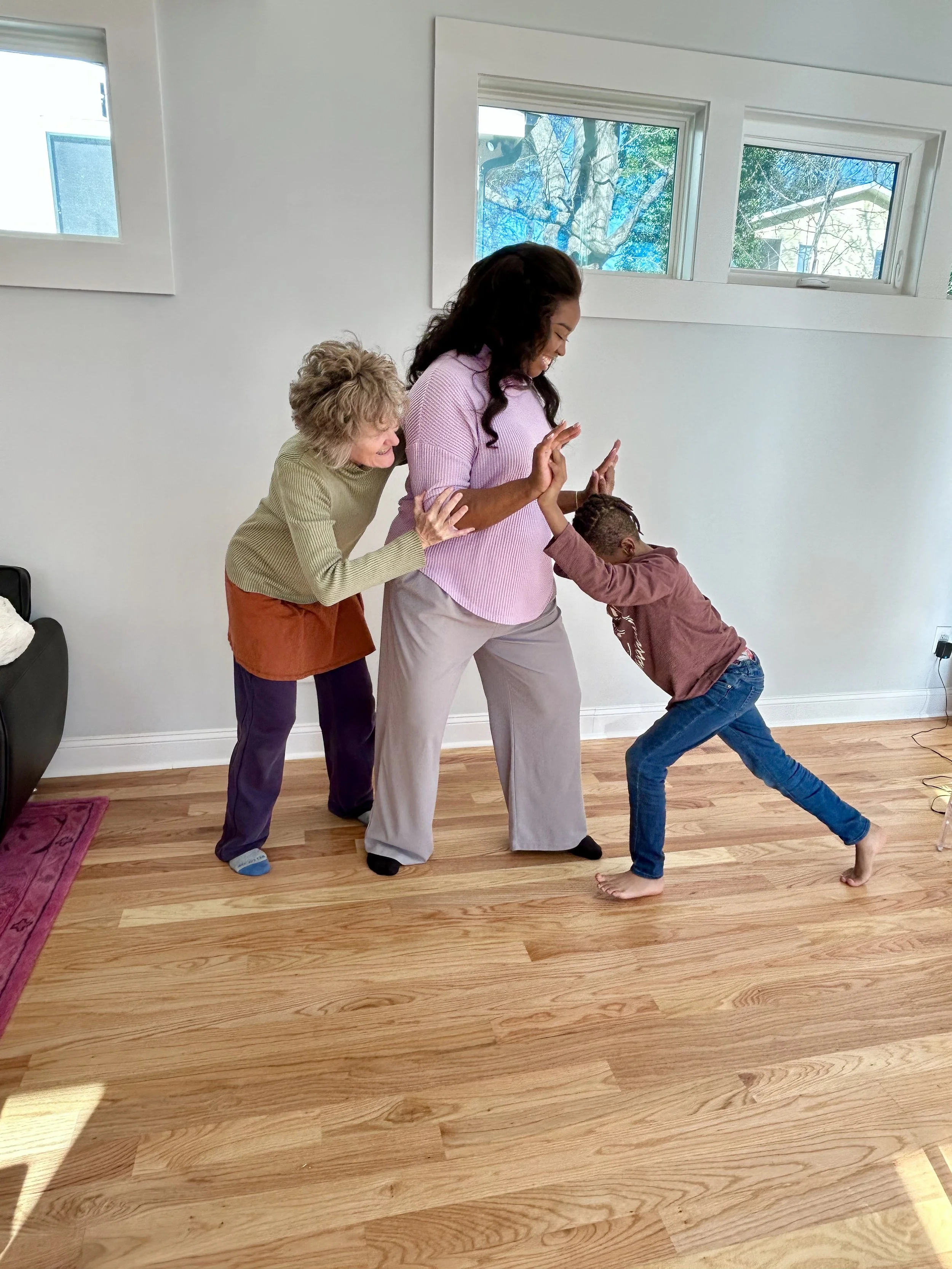
These practices are grounded in early developmental patterns and are designed to help your body experience support, expression, and integration in new ways. For example, this might include movements of reaching, receiving, and, when needed, pushing and differentiating.
-
Over time, many people notice subtle but meaningful shifts:
feeling more present and settled in their body
responding with more consciousness instead of reacting automatically
experiencing greater flexibility in relationships
maintaining a clearer sense of self while staying connected to others
sensing more access to expression, energy, and rest
Through Chi for Two and my M-Bodied approach, you begin to embody…
-
Lasting change doesn’t come from insight alone—it comes from experiencing something different in your body, your life experience.
Through relational, invitational practices, you begin to shift familiar ways of responding. Instead of repeating automatic reactions, your body has the opportunity to practice new possibilities with support—creating the foundation for meaningful, lasting change.
-
Many patterns form early, before you had words—shaping how you connect, express needs, and respond to stress.
This work revisits foundational developmental experiences through movement and relational support, offering somatic redos that allow your system to reorganize with greater ease, flexibility, and resilience.
-
Healing doesn’t happen in isolation—it happens in the moment-to-moment interaction between people.
With growing awareness of relationships that include power differentials (like child/parent, client/helper) and power equality (siblings, lovers, friends), you begin to notice and shift the “dance” of connection—how you move toward, away from, or against others and yourself. Over time, this creates more choice, clarity, and adaptability in how you relate.
-
Your nervous system is designed for more than just “calm.”
Chi for Two® supports a wider range of embodied experience, grounded in the understanding that no movement, expression, or part of you is inherently intolerable. Instead of suppressing or overriding responses, this work helps your system integrate them—supporting greater capacity for connection, expression, individuation, play, and restoration.
-
The patterns you carry may not have started with you—but they can shift with you.
As your nervous system reorganizes through new relational experiences, new ways of relating become possible—within yourself, with others, and across generations.
Experiencing Change from the Inside Out
Chi for Two invites a different kind of healing—one that unfolds through relational, embodied experience, not just understanding.
As your body begins to experience new patterns of support, connection, and expression, change often feels less effortful and more integrated. What once felt automatic or constrained can begin to soften, reorganize, and open into new possibilities.
Over time, many people notice a growing sense of steadiness, connection, and aliveness—within themselves, in their relationships, and in how they move through life.
If this way of working speaks to you, you’re welcome to reach out and explore whether it feels like a good fit.
Your Questions, Answered
-
A: Movement is always invitational and adapted to your comfort level. Some sessions may include simple, guided movements. Some might be micro-movements, while others may focus more on reflection, conversation, or energetic awareness. Some could include more expressive movement. There is no expectation to perform—this work meets you where you are.
-
A: While Chi for Two draws from dance/movement therapy principles and techniques, along with other somatic and developmental movement principles, you do not need any dance or otherwise movement experience.
The focus is not on performance or choreography, but on relational movement—how your body expresses, connects, and responds in relation to yourself and interaction with others.
-
A: Many somatic approaches focus primarily on the individual experience. Chi for Two—with Chi meaning energy and Two meaning relational—centers how patterns form and shift through two-person interactions, shaping emotional, physiological, and relational functioning.
This work also incorporates developmental movement patterns and guided relational practices to support deeper, more integrated change.
A key aspect of this approach is the inclusion of expressive, and at times more percussive or oppositional movements within the therapeutic relationship. When supported and attuned to, these expressions help foster autonomy, agency, and eventual individuation.
-
A: That’s completely normal. This work often involves exploring new ways of being, new somatic experiences, and it’s natural for that to feel unfamiliar at first.
Sessions are paced with care, and there is no pressure to do anything beyond what feels manageable and supportive.
-
A: Yes. Because this approach works with nervous system patterns shaped over time—including early and multi-generational experiences—it can support meaningful shifts in patterns that may feel deeply ingrained.
-
A: Many people come to this work after trying traditional talk therapy and noticing that insight alone didn’t create lasting change.
Because Chi for Two is experiential and relational, it offers something different—helping your body have new experiences that can support deeper, more integrated shifts.
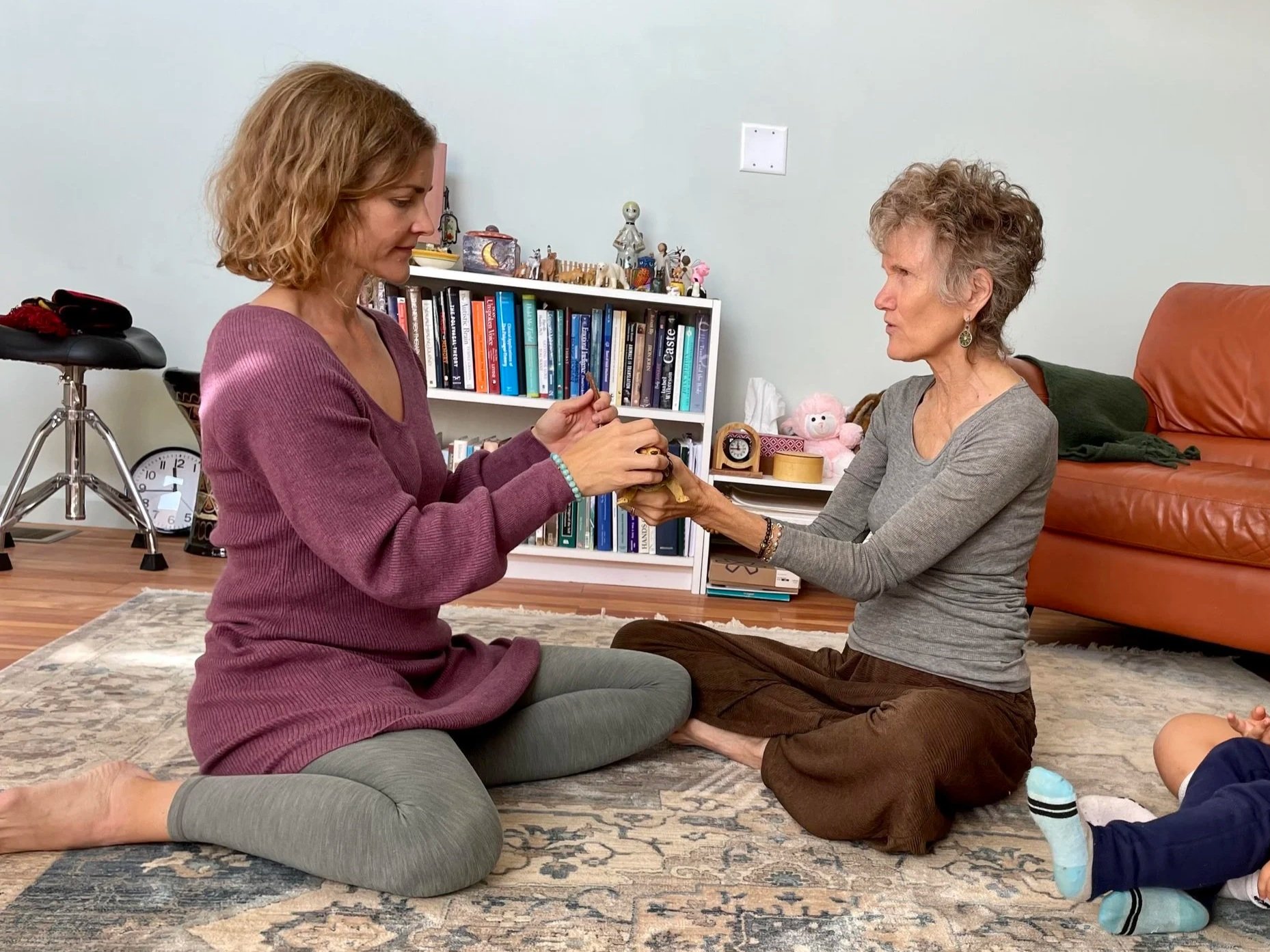
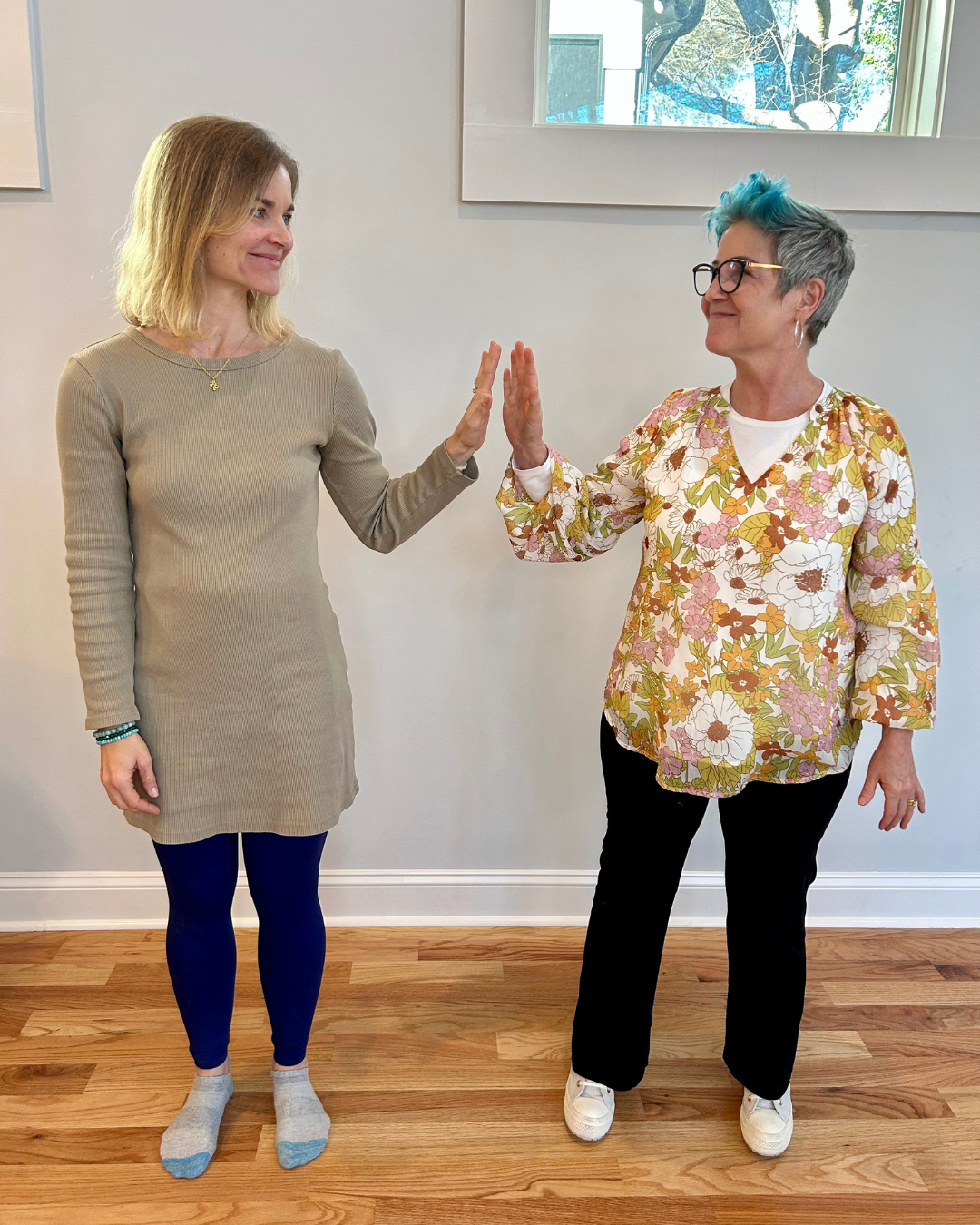
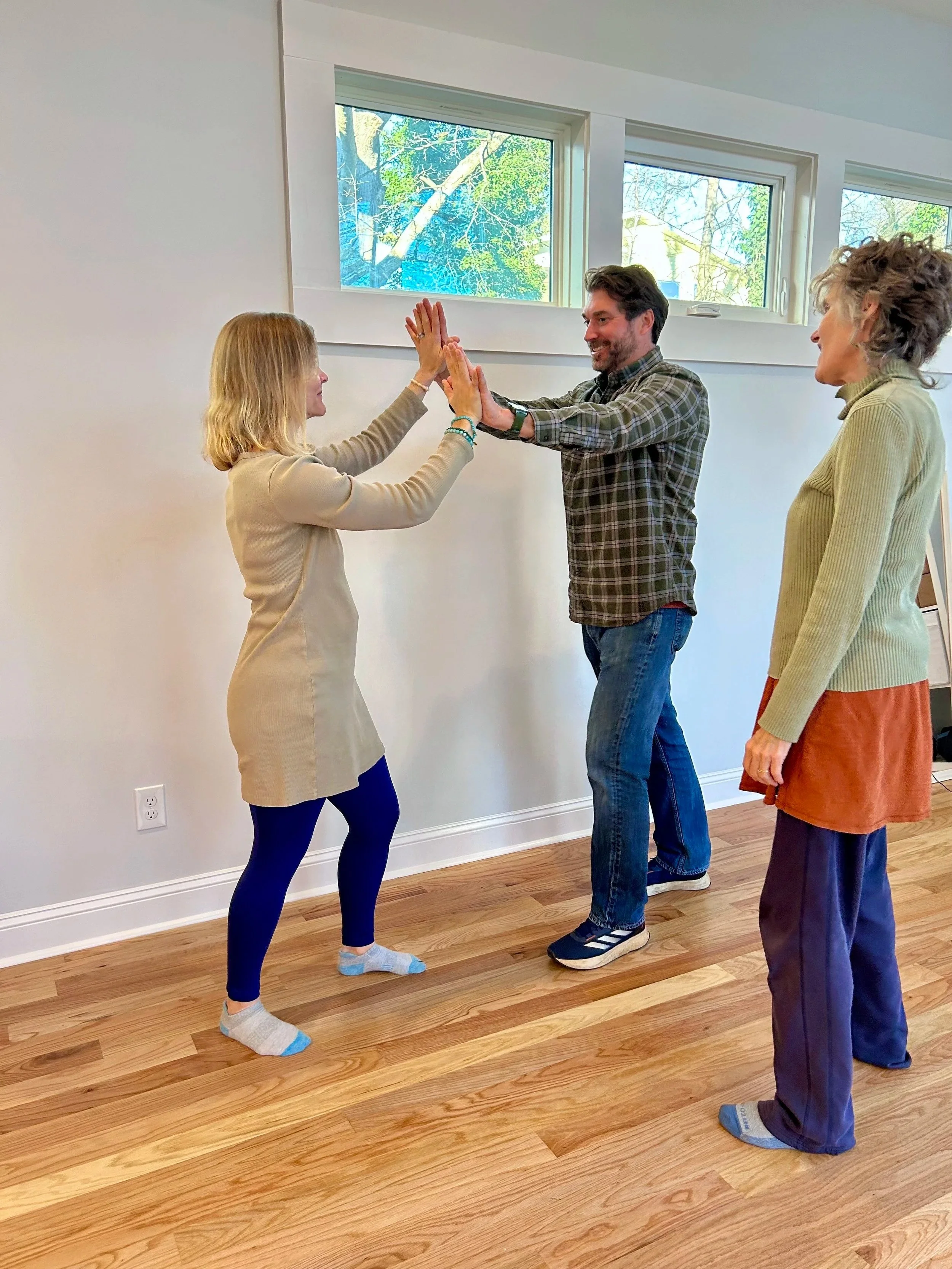
Chi for Two originator Dee Wagner and co-developer Caroline Gebhardt demonstrate the practice Reach Grab Pull.