

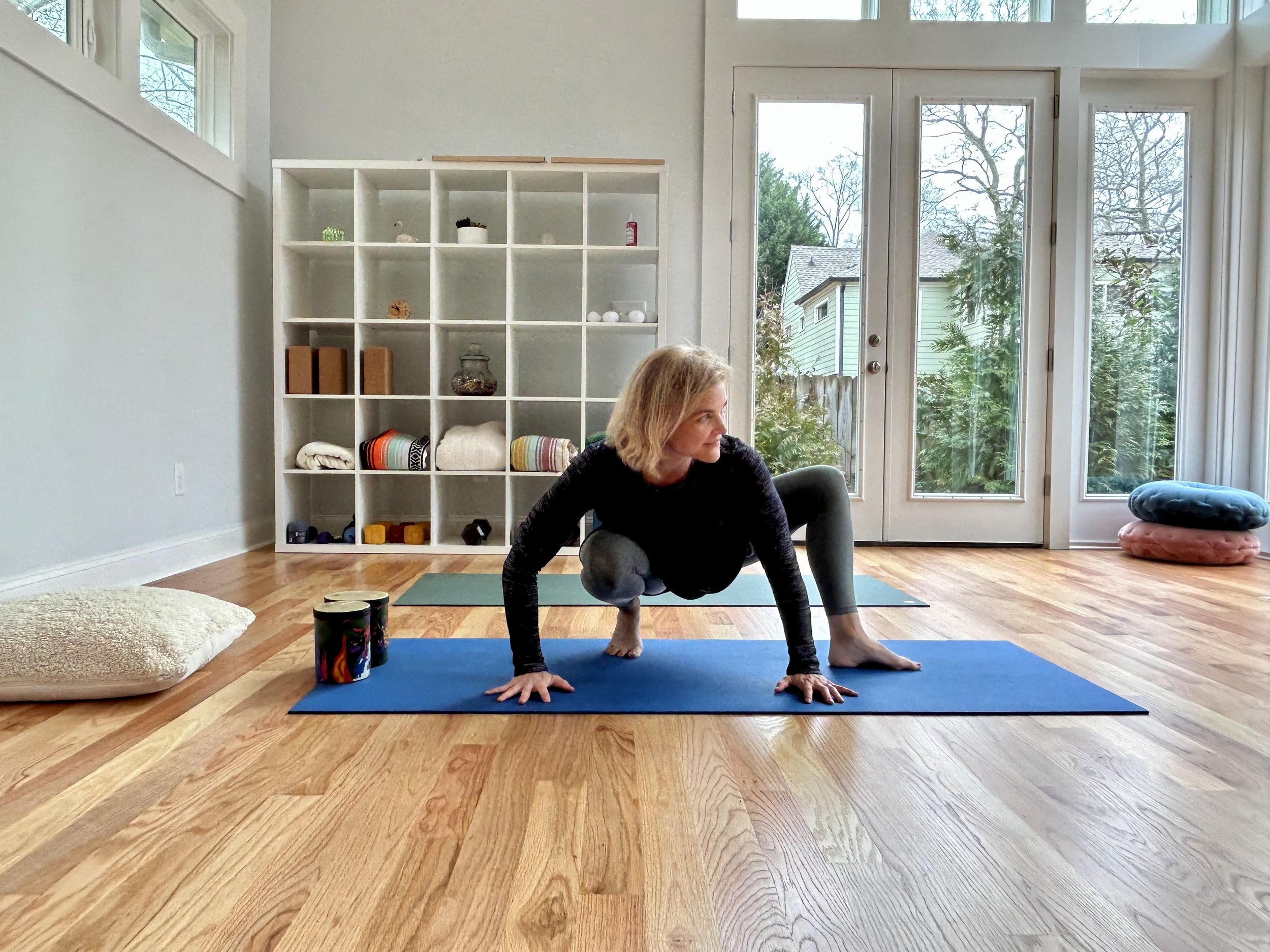
Relational Somatic Therapy in Atlanta, GA
A relational, body-based approach to trauma healing and nervous system regulation
Somatic Therapy for individuals, families and romantic partners in person Atlanta, GA, online across Georgia
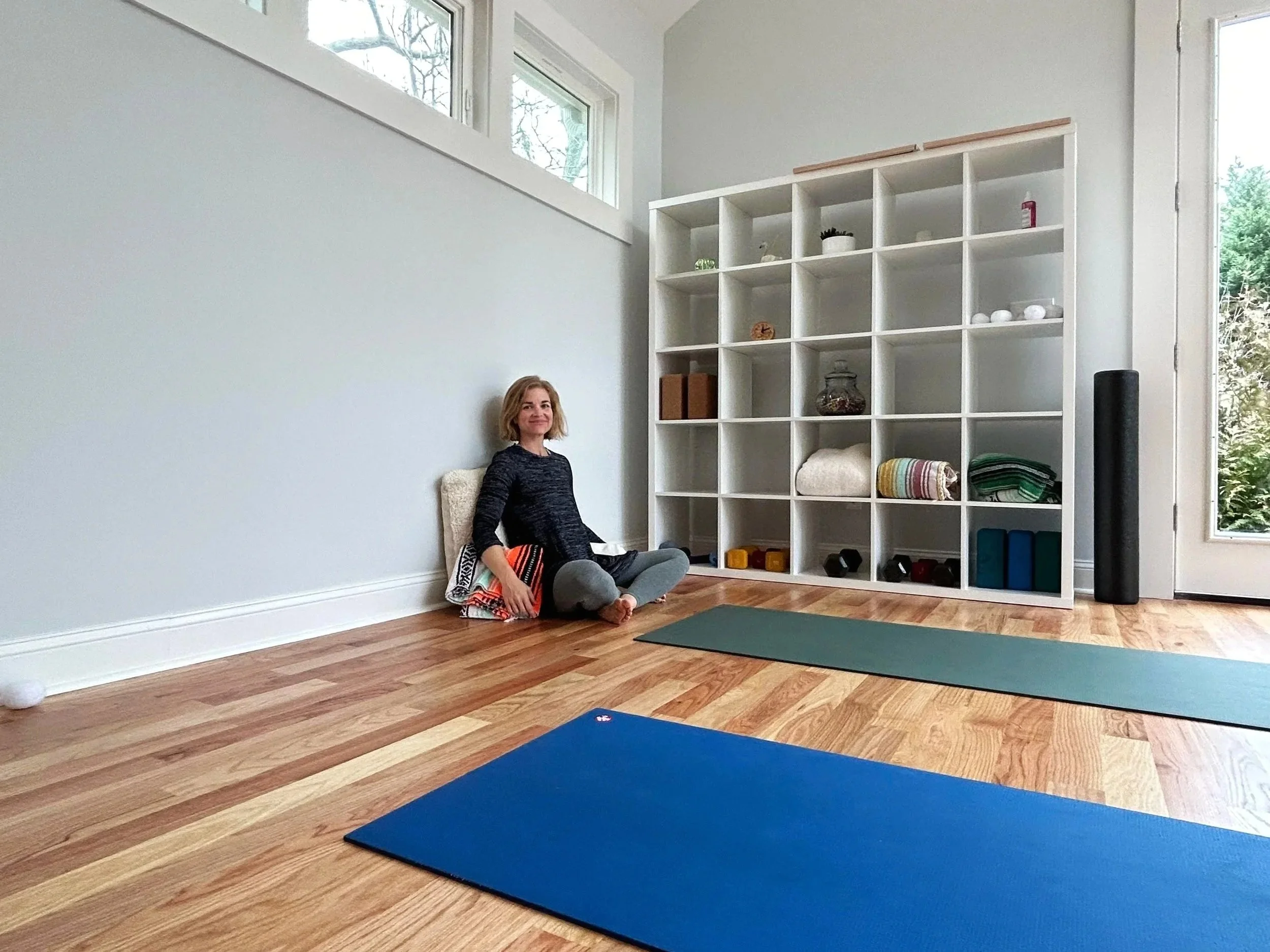
You notice patterns in your body and relationships that don’t shift through insight or talk alone.
Somatic therapy brings the body into the healing process—gently expanding beyond cognitive understanding into lived, embodied experience.
Many of the patterns we carry begin early in life. Our first relationships shape how safe it feels to be present in our bodies, to express emotion, and to move between connection and independence.
Over time, these experiences—along with patterns carried through families and environments—become reflected in our nervous system responses, movement patterns, and ways of relating.
This is where relational somatic therapy offers something different.
Because of these early imprints, change doesn’t always happen through thinking alone. Often, the body needs new relational somatic experiences—ones that support safety, connection, and responsiveness in a more direct, embodied way.
Through relational somatic therapy, it becomes possible to reconnect with your body’s intelligence—your life force—within the support of therapeutic human-to-human interactions. This relational support serves as the foundation for a deeper somatic experience of healing, steadiness, flexibility and capacity in how you move through life.
In M-Bodied® Therapy, the body is welcomed as an essential part of the process—offering space for exploration, discovery, and change.
Sessions may include conversation, drawing, myths, or attachment-informed somatic practices drawing from early relational movement and developmentally-significant yoga. Often, these are woven together, guided by your pace and what feels supportive to help you experience new patterns of connection, ease and empowerment.
Over time, this work supports the restoration of vitality in the body, in relationships, and across generations.
Why Somatic Therapy Helps
When your body feels supported and safe, you have greater capacity to respond to life with flexibility and steadiness.
You may begin to experience more ease in your body, more range in your emotions, and more clarity in your relationships. You can better recognize your body’s signals—for nourishment, movement, rest, and connection—and respond in ways that feel supportive rather than activated.
Over time, this can support not only your relationship with yourself, but also how you show up with others, including your children and loved ones.
This is where somatic therapy offers something different.


Long before you had words, your nervous system was learning how safe it was to connect, to express emotion, and to respond to stress.
Over time, these experiences shape your physiology, movement patterns, and ways of relating. When experiences overwhelm your capacity to process them, the body may hold protective patterns—such as tension, shutdown, hypervigilance, or rigid ways of coping.
While insight and conversation remain valuable, a relational and developmental somatic approach recognizes that lasting change also requires new experiences in the body.
Within a supportive therapeutic relationship, we might explore somatic practices, developmentally-significant yoga, and developmental movement patterns tailored to your unique needs. These experiences can help restore nervous system functioning, deepen body awareness, and expand your capacity for connection.
As your system begins to shift, you may notice more flexibility in how you respond to stress, emotion, food, and relationships—along with a renewed appetite for life.
The Relational Movement Approach Behind this Work
Many people come to this work struggling with their relationship to their body, food, the intensity of parenting and relationships, or chronic anxiety, depression, people pleasing—an intense feeling of never feeling good enough.
While these may appear different on the surface, they often share common nervous system patterns shaped by experiences of stress, disconnection, or overwhelm.
Somatic therapy offers a way to work with these patterns—so greater ease, connection, and responsiveness can emerge.
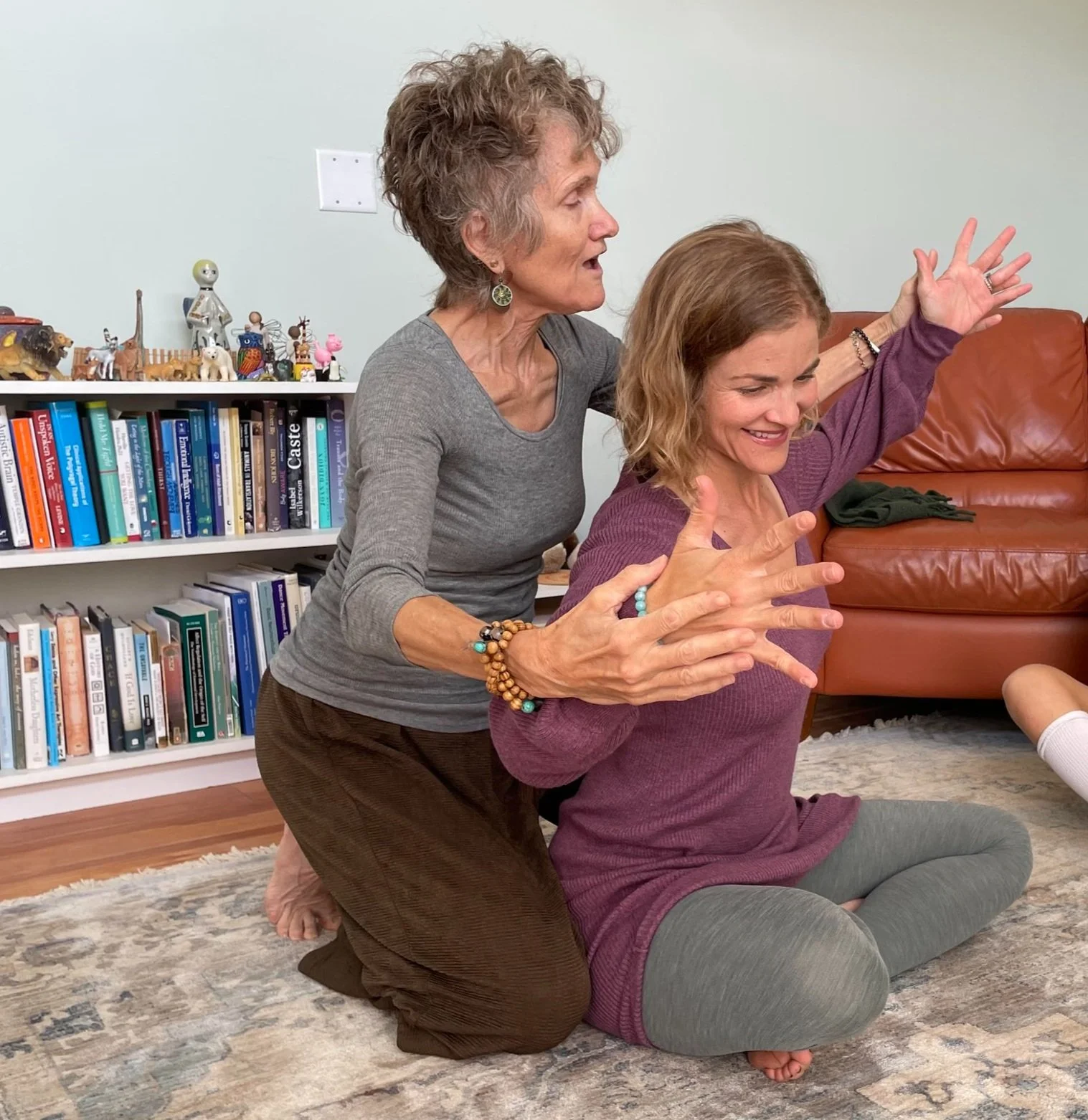
My work is grounded in Chi for Two®, a mindful embodiment method for trauma healing that I helped co-develop and now teach as an ISMETA-Approved Training Program.
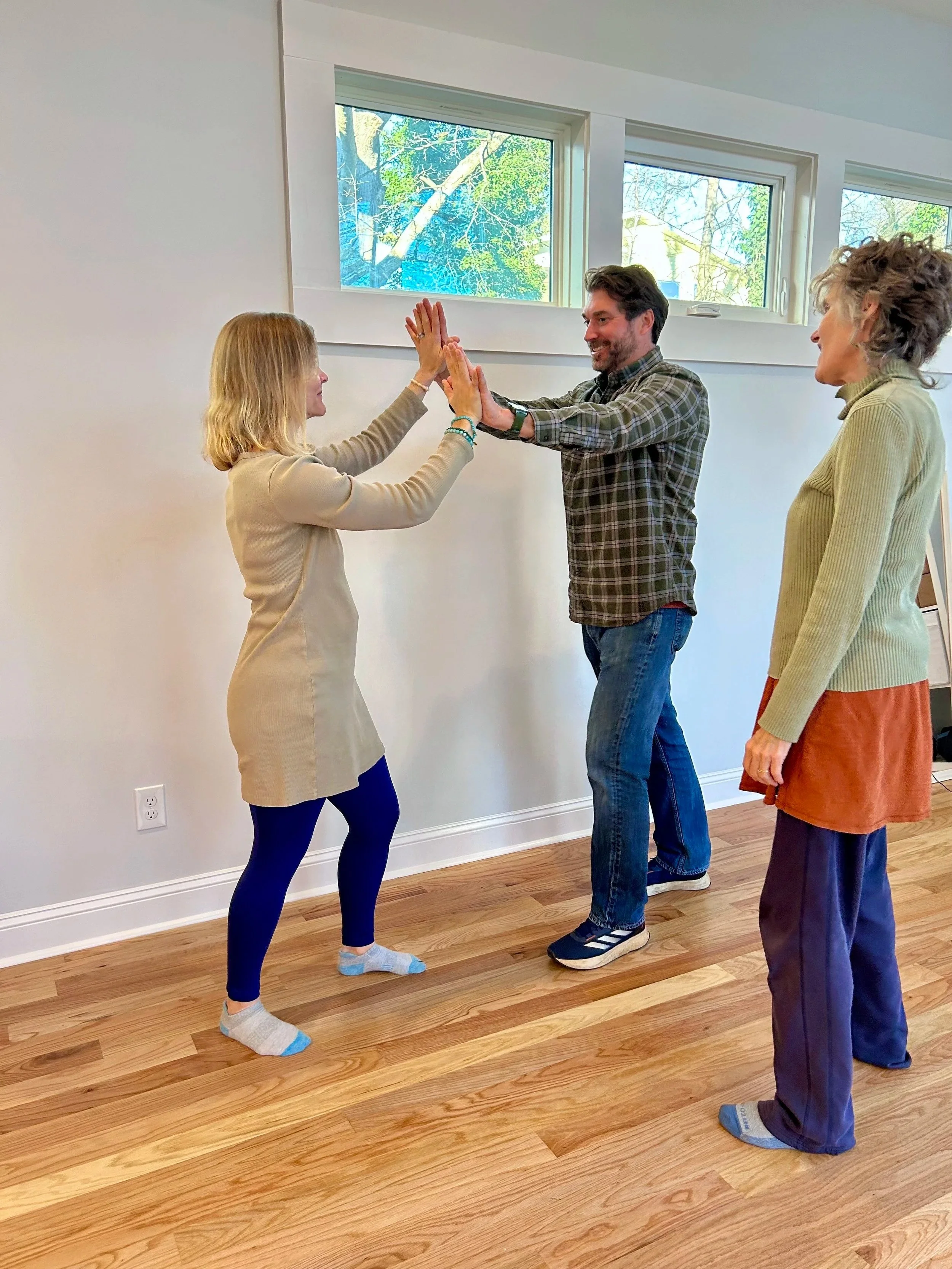
Chi for Two is a relational somatic approach that supports the body in re-experiencing early developmental patterns of safety, connection, and play. Chi (meaning energy) for Two (meaning relational) reflects a foundational principle: our nervous systems do not heal in isolation. The therapeutic two-person interactions provide more sustainable experiences of activation and rest.
Through relational support, developmentally-informed somatic practices, and the body’s innate capacity to reorganize toward easeful functioning, this work creates the conditions for meaningful and lasting change.
This approach weaves together somatic therapy, attachment-based techniques, and developmental movement to support reconnection with parts of yourself that may have become inhibited, disconnected, or overwhelmed over time.
Within my practice, I bring this work to life through M-Bodied: Mindful Movement as Mothering Medicine®, an approach I developed to explore how relational support and embodied movement can support healing and nourishment for individuals and families.
In this context, “mothering” is understood as a verb—the human capacity to nurture, attune, and support life within ourselves and in relationship with others.
Here, healing extends beyond symptom relief—toward restoring a refreshing sense of aliveness in the body, in relationships, and across generations.
Somatic Therapy can help you with…
-
The ability to be in your body with greater steadiness, awareness, and responsiveness.
As your system begins to feel more supported, you may notice an increased capacity to stay present with your internal experience—rather than becoming overwhelmed, disconnected, or reactive.
This presence becomes a foundation for how you relate to yourself, your body, and others.
-
A wider range of responses to stress, emotion, and connection.
Rather than feeling stuck in patterns of anxiety, shutdown, or reactivity, your system can begin to move more into Social Engagement system functioning experiencing more ease, strength and presence in active states and rest states.
This flexibility allows for more choice in how you respond to life’s inevitable challenges.
-
A deeper awareness of your body’s cues for nourishment, movement, rest, and connection.
Over time, you may find it easier to recognize what your body is communicating—and to respond with greater clarity and care.
This attunement supports more trusting and sustainable relationships with food, movement, and your overall well-being.
-
The ability to stay connected—to yourself and to others—without losing your sense of self.
As your nervous system becomes more supported, relationships may begin to feel less overwhelming or effortful. You may notice more ease in expressing yourself, setting boundaries, and engaging in meaningful connection.
-
A greater ability to move through past experiences without feeling defined or limited by them.
Rather than old patterns automatically shaping your responses, you may begin to experience more space, choice, and possibility in how you live and relate.
-
A renewed sense of energy, movement, creativity, and engagement in life.
As protective patterns soften and your system reorganizes, many people experience a return of qualities that may have felt distant—such as play, curiosity, pleasure, and a deeper sense of being fully alive.
These capacities develop over time through consistent, relational, and embodied support—at a pace that respects your system.
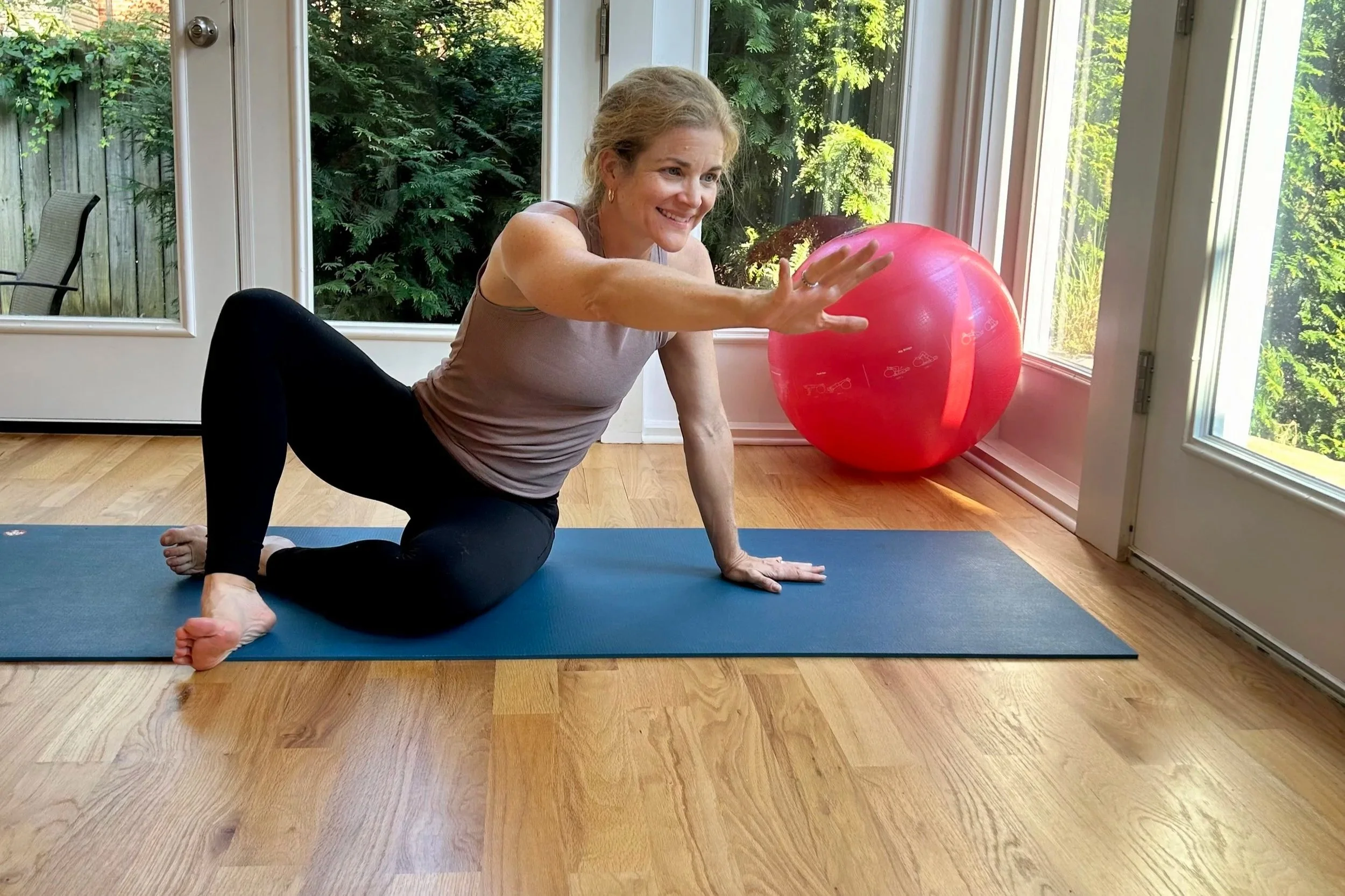
Moving, Sensing, and Shifting into a New Way of Living
Somatic therapy offers more than insight—it opens the possibility for a different lived experience in your body.
As your system begins to feel more supported, you may notice subtle but meaningful shifts: a greater ability to stay with yourself, more flexibility in how you respond to stress, and an increased sense of connection in your relationships.
Over time, these changes can build into a way of living that feels more steady, more responsive, and more fully your own.
If you’re curious about experiencing this work, you’re welcome to reach out or schedule a consultation.
Frequently Asked Questions
-
While somatic therapy modalities vary, M-Bodied Therapy offers somatic therapy that is relational—meaning, the two-person interactions can create an experience for co-regulation, from helper to client. This body-based approach offers healing, re-patterning, and growth for one’s nervous system, emotions, and lived experience.
Rather than focusing only on thoughts or insight, somatic therapy includes awareness of physical sensations, movement patterns, and relational experiences to support change as your body and movement patterns are experienced more consciously.
With practice in somatic therapy sessions, what you experience in therapy can be more easily accessed and explored with self support.
-
Traditional talk therapy often focuses on thoughts, emotions, and behavior patterns through conversation and insight.
Somatic therapy includes these elements, while also bringing attention to how experiences live in the body and what new moves might be emerging for new experiences with relational support. This may include noticing sensations, exploring movement, and working with nervous system responses in real time.
This integration can support shifts that are sometimes difficult to access through thinking alone.
-
Sessions are invitational, collaborative and guided by your pace and preferences.
Some sessions may focus more on conversation, while others may include somatic movement practices such as body awareness, developmental movement, or relational repair and connection. Often, these are woven together.
These somatic explorations can take place while talking on the sofa, or on yoga mats, exploring moving through space, or using expressive art practices like instruments, drawing and storytelling.
There is no “right way” to participate—this work is invitational and tailored to what feels supportive for you.
-
M-Bodied Therapy offers somatic therapy informed by the somatic method Chi for Two, which synthesizes many trauma and relational healing modalities informed by research in neuroscience, attachment theory, and relational methods, while recognizing science continues to evolve and new theories emerge.
-
Somatic therapy can support individuals working through trauma, anxiety, disordered eating, relationship challenges, or patterns that feel difficult to shift through cognitive approaches alone.
It may be especially helpful for those who sense that their experiences are held in the body, or more than words can articulate, and are looking for a more integrated approach to healing.
-
Each person’s process is unique.
Because this work involves the nervous system and patterns developed over time, change often unfolds gradually. Many people begin to notice subtle shifts early on, with deeper changes emerging through consistent, relational support.
This approach values sustainable growth over quick fixes, depth over speed.


“Perhaps all the dragons in our lives are princesses who are only waiting to see us act, just once, with beauty and courage. Perhaps everything that frightens us is, in its deepest essence, something helpless that wants our love.”
- Rainer Maria Rilke, Letters to a Young Poet
What People Are Saying
“This therapy has transformed the way I experience moving through and being in the world.”
— client
“Now I know it’s not in my head, it’s in my body. The healing, the progress, happens as I experience what I really needed so long ago in my body.”
— client